
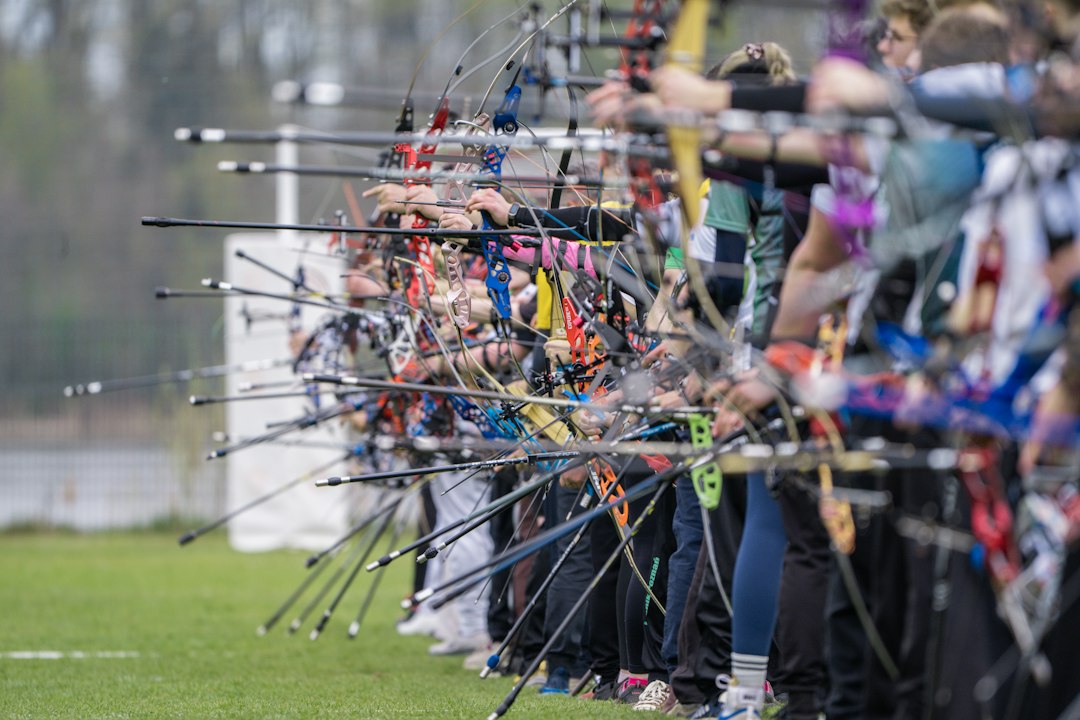
A good beginner archery stance is balanced, comfortable, and easy to repeat. Start with your feet about shoulder-width apart and roughly parallel to the shooting line, then check that your weight is steady across both feet. A coach can help you adjust for mobility, bow style, and the range.
Key Takeaways
Begin with a relaxed, balanced stance that you can find again for every shot. World Archery’s entry-level coaching guidance uses parallel feet around shoulder width as a stable starting position. Keep your knees soft, avoid leaning, and make any stance changes one at a time with a coach.
- Stand in the same place and direction at the shooting line for each end.
- Keep your weight balanced and your upper body relaxed; do not force a rigid pose.
- A square stance is a useful starting point, while an open stance may suit some archers after coaching.
What is a good archery stance for beginners?
A good beginner stance keeps your feet stable, your body balanced, and your shoulders relaxed while you face the target consistently. Start with feet about shoulder-width apart and nearly parallel to the shooting line. Comfort and repeatability matter more than copying an exact pose from an experienced archer.
Think of the stance as the foundation of the shot sequence. If your feet move or your weight shifts between arrows, your upper body may compensate. Practice finding the same position without a bow first, following your coach’s range instructions.
How should you position your feet and body?
Place both feet on the shooting line with enough space to feel steady, then let your knees remain relaxed and your weight balanced. Keep your hips and shoulders comfortable, look toward the target without twisting sharply, and check that you can hold this position without rocking or leaning.
- Stand at the marked shooting line and point your body in the direction your coach shows for your bow hand.
- Set your feet about shoulder-width apart, with toes close to parallel to the line as a first try.
- Soften your knees and distribute your weight across both feet rather than leaning onto your toes or heels.
- Raise the bow only after the range is clear and the coach signals that shooting may begin.
- After a few shots, notice whether you sway, lift a heel, or rotate to reach the target. Adjust with your coach, then repeat the stance.
Do not copy foot positions from a photo without checking your own balance. Archers differ in handedness, body shape, strength, and mobility. If standing is uncomfortable, talk to your coach about safe adjustments or an adaptive setup.
What is the difference between a square and open stance?
In a square stance, the feet are close to parallel with the shooting line. In an open stance, the front foot turns slightly toward the target, rotating the body a little more forward. Both can be used in target archery; beginners should first learn a stable position and then compare small changes with a coach.
| Stance | Basic foot position | Useful starting point |
|---|---|---|
| Square | Feet roughly parallel to the shooting line | Simple position for learning balance and repeatability |
| Open | Front foot angled slightly toward the target | May feel more natural for some archers; test under coaching |
Avoid turning your feet so far that your hips and shoulders feel strained. The best stance is not the one with the largest angle; it is the one that lets you stay balanced and repeat your shot without pain.
For the next step in your form, read our new guide to a consistent archery anchor point and how to measure draw length. The beginner’s guide covers range basics, while compound vs recurve bows explains how equipment styles differ.
Does stance change in traditional and Indian archery?
The same goals—balance, a safe shooting line, and repeatability—apply, but foot placement can vary across traditional and Indian archery styles. Follow the technique taught for that discipline rather than assuming the modern target-recurve stance is universal. A knowledgeable coach can adapt the position to the bow and the archer.
If your local style uses a different shooting posture, keep the feet stable and the bow pointed safely downrange. Do not force a stance that causes pain or makes you lose balance.
Frequently Asked Questions
These concise answers cover the first stance checks most beginners need. Your coach may adjust them for your bow hand, mobility, shooting style, or range layout.
How far apart should your feet be in archery?
About shoulder-width apart is a common starting point for beginners. Adjust slightly if needed to stay balanced and comfortable.
Should my feet be parallel when shooting a bow?
Feet roughly parallel to the shooting line are a stable beginner starting point, though some archers use a coached open stance.
Should I lean forward when shooting archery?
Avoid deliberate leaning. Keep your balance steady and ask a coach to check your posture if you sway or feel strained.
Is the same stance used for every bow style?
No. The basic goal of a stable, repeatable position is shared, but stance can vary with bow style, mobility, and discipline.
Reference: World Archery Coaches Manual, Level 1.