
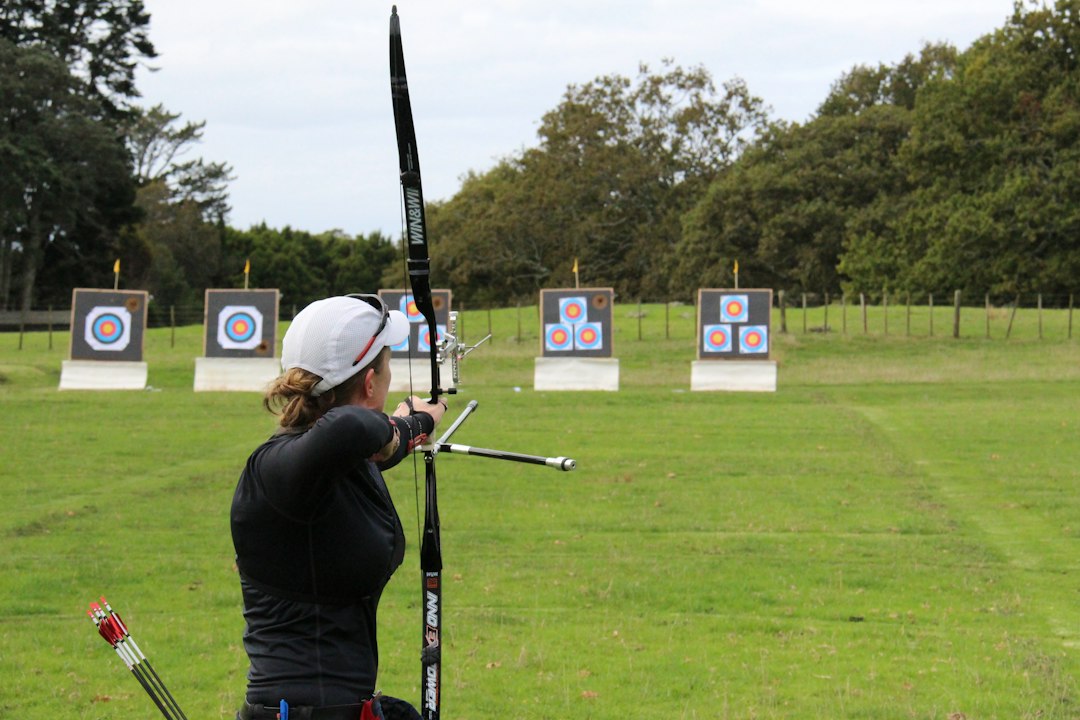
To aim a recurve bow, use a repeatable stance and anchor, then align the sight pin and string picture with your chosen point on the target using the same aiming eye and head position each shot. Repeatable form supports a steady shot, even if the sight pin moves slightly.
Key Takeaways
With a sighted recurve, aiming is a repeatable sight picture built from eye position, anchor, string alignment and pin placement. Keep those references steady through a controlled release, and make sight adjustments only after consistent arrow groups show a pattern at the same distance.
- Set your stance and anchor before judging the sight picture.
- Use one aiming point and one setup while learning; do not chase single arrows with sight changes.
- Barebow and traditional methods differ from sighted recurve aiming; ask a coach which method and rules apply.
How do you aim a recurve bow with a sight?
At full draw, settle into the same comfortable anchor, confirm the string picture taught for your setup, and place the sight pin on the intended point. Keep your head relaxed, maintain back tension and bow-arm direction, then release smoothly without changing the aim to chase one arrow.
- Check the setup. Make sure the bow is assembled correctly, the sight is secure, and the range is clear under your club’s safety rules.
- Set your stance. Stand in a balanced position and turn toward the target as your coach has taught. See the beginner archery stance guide for a starting point.
- Draw and anchor consistently. Reach the same full-draw reference without moving your head toward the string. The archery anchor-point guide explains why repeatability matters.
- Build the sight picture. Use the aiming eye and string alignment specified for your setup, then place the pin over the intended point of aim.
- Keep the shot moving. Maintain your coach-taught hold and back tension through the release and follow-through. If the bow feels hard to control, stop and ask your coach to check the draw weight and form.
What should the recurve bow sight picture look like?
A sight picture combines your aiming eye, anchor reference, string alignment and sight pin. World Archery explains that the anchor acts like a rear sight and the pin like a front sight; the archer lines up the pin with the intended target point. Keep your head and anchor position consistent.
During a sighted target-recurve shot, use the pin as one reference while keeping a relaxed bow arm and following the sight picture your coach sets for the distance and drill. A sighted recurve sight such as the Decut HONOR-RE target sight is one example of an adjustable target sight; check its mounting and pin specifications against your riser before using it. The recurve sight category shows other options.
Why does a consistent anchor matter when aiming?
Your anchor fixes the bowstring and drawing hand in a repeatable relationship to your face and aiming eye. If it changes, the sight picture changes too, even when the pin appears to cover the same target spot. Practise the anchor and ask a coach to check it from the side.
Draw length is measured at full draw, so changing your anchor can also change where you reach the bow’s intended position. Use the draw-length measuring guide alongside the recurve equipment guide when checking a setup.
How should you correct your aim if arrows land off target?
Do not chase each arrow with a sight adjustment. Check whether your arrows form a consistent group and whether your stance, anchor, string picture and release repeat. Ask a coach to verify the sight setting and change one variable at a time after the group shows a pattern.
Keep aiming at the same point while you collect a useful group at the distance your coach has chosen. A single arrow can be affected by a change in form or release; it is not enough evidence to move a sight. If the group is consistently displaced, make a small coach-approved adjustment and observe the next group.
How is sighted recurve aiming different from barebow?
A sighted target recurve uses a sight pin as a deliberate aiming reference. Barebow recurve is shot without a sight, so archers use a permitted method such as point-of-aim or stringwalking. Both depend on a repeatable anchor and shot sequence, but their aiming references and equipment rules differ.
| Aspect | Sighted target recurve | Barebow recurve |
|---|---|---|
| Aiming reference | Sight pin placed on the coach-selected point of aim | Arrow point and a permitted aiming method, which may include point-of-aim or stringwalking |
| Equipment | Uses a sight when the bow class and competition rules allow it | Shot without a sight; competition rules limit which accessories may aid aiming |
| What to repeat | Anchor, head position, string picture and sight setting for the distance | Anchor, string picture, tab position or chosen method, and distance routine |
World Archery describes barebow as a recurve style without aiming or stabilising accessories and explains stringwalking as one technique. Rules vary by discipline, so check the applicable rules and learn the method with a coach rather than transferring a sighted setup unchanged.
How does aiming apply to traditional and Indian archery?
Traditional and Indian archery include many bow shapes, release methods and teaching lineages, so no single aiming method or anchor fits all. A bow without a sight may use the arrow point, point-of-aim, gap aiming or a practice-based reference. Learn that bow’s method with a knowledgeable coach.
World Archery’s competitive barebow class defines one modern-recurve discipline. Traditional and Indian archery include broader bow styles and teaching traditions, so learn the rules and method for the specific format you shoot. When changing bow styles, check the bow’s draw limits, arrow match, release method and local range rules with a coach or experienced traditional archer.
For source reading, see World Archery’s recurve technique guide, its barebow overview, and the World Archery Level 2 Coaches Manual. Featured image: arrow leaving a bow during archery practice, photographed by Bill Fairs via Unsplash.
Frequently Asked Questions
These concise answers cover the most common beginner questions about a recurve bow sight picture. Your coach should confirm the method, sight setting and safe shooting distance for your bow, target face and range. Use these answers with hands-on coaching.
Where should I look when aiming a recurve bow?
Use the aiming eye and sight picture taught for your setup. Keep your anchor and head position consistent, then place the pin on the point assigned for that distance or drill.
Should the sight pin stay perfectly still?
No. Some movement can happen at full draw. Maintain a controlled hold and smooth release; if you cannot hold the bow safely, stop and ask your coach to check your form and draw weight.
How do I aim a recurve bow without a sight?
Learn a barebow method such as point-of-aim or stringwalking where the bow style and rules allow it. Keep your anchor and shot sequence consistent, and work with a coach at a safe distance.
Why do my arrows land away from the point I aimed at?
Possible causes include inconsistent form, sight settings, bow setup, tuning or conditions. Hold one aiming point, look at a group rather than one arrow, and ask a coach to check the setup before adjusting it.
Does every recurve sight fit every recurve bow?
No. Riser mounting, sight-pin connections and bow class can affect compatibility. Check the sight manufacturer’s specifications and ask a coach or archery shop before buying or mounting a sight.