
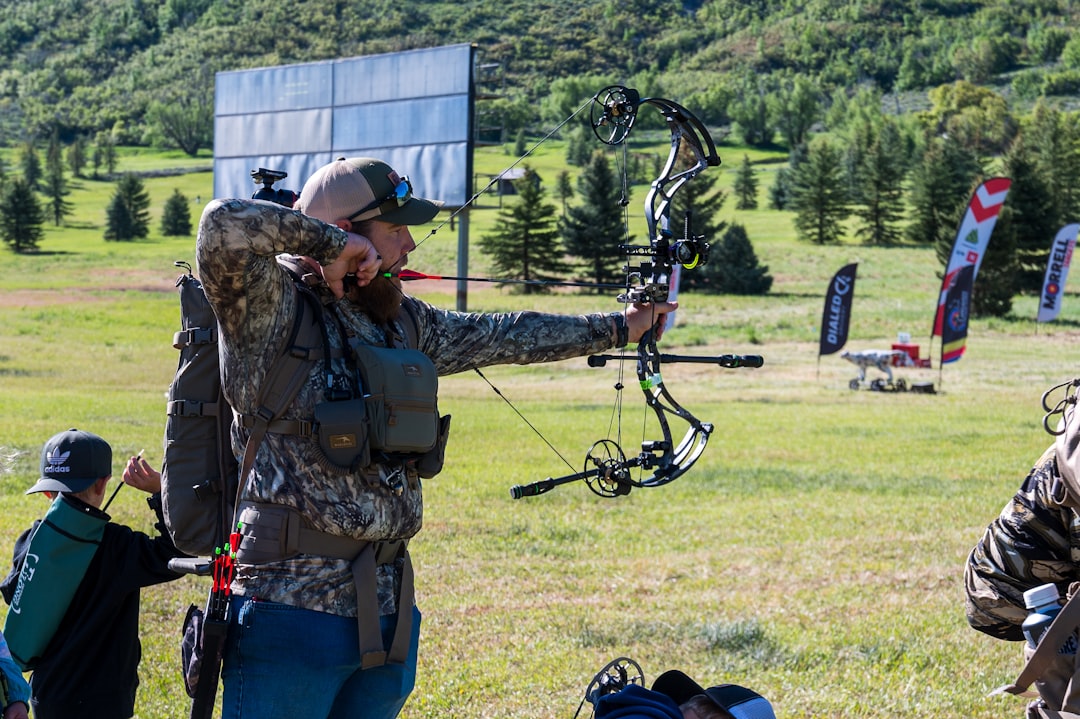
To paper tune a compound bow, shoot a correctly matched, fletched arrow through a taut sheet of paper at close range and inspect the tear around the point hole. A clean, centered tear is a useful starting result, but a tear is a diagnostic clue—not proof that every part of the bow is perfectly tuned.
Paper tuning works best after the bow is assembled to the manufacturer’s baseline and the archer can shoot a repeatable shot. The method can reveal an arrow leaving with a high, low, left, or right tail, but several different faults can create a similar tear.
Key Takeaways
Paper tuning is a short-range check of how an arrow leaves the bow. Confirm the arrow, rest, nocking point, clearance, and bow setup first; repeat the shot; change only one safe, manufacturer-approved variable at a time.
- Use a fletched arrow that is correctly spined, undamaged, and matched to the bow.
- Place the paper at shoulder height, stand square to it, and shoot several consistent arrows.
- Do not apply universal left/right tear rules; handedness, bow design, release, and setup change the diagnosis.
What does paper tuning tell you?
Paper tuning shows the arrow’s initial attitude as it leaves the bow. The point makes a hole and the fletching leaves slits; a tail offset suggests the arrow is yawing or pitching at that moment, which may come from tune, clearance, setup, or the shot itself.
It does not measure the archer’s long-distance grouping, sight marks, broadhead flight, or every aspect of bow timing. Think of it as one checkpoint in a larger tuning process. A close-range clean hole is useful, but the bow still needs to group consistently at distance and pass the checks required for its arrow and discipline.
The result can also reflect the person shooting. If repeated arrows produce different tears, first check stance, grip pressure, anchor, release, and whether the bow is being torqued. A test that changes from shot to shot is not a reliable basis for moving the rest.
Easton describes paper tuning as a commonly used test for compound bows with mechanical release aids and gives a short-range procedure in its tuning guide. The same general test may be used with other setups, but follow the bow and arrow manufacturers’ instructions for your exact equipment.
What do you need for a safe paper tune?
You need a stable paper frame, a safe target butt behind it, a correctly matched and inspected fletched arrow, a bow set to the manufacturer’s baseline, and enough room to shoot straight through the sheet. Use a supervised range and follow its commands and safety rules.
- Paper held taut in a frame, with the sheet’s center near the archer’s shoulder height.
- A substantial target butt or backstop several feet behind the paper to catch the arrow.
- Three or more matched fletched arrows in sound condition, so the reading can be repeated.
- A bow square or setup tools only if you know how to use them and have the manufacturer’s baseline.
- A safe shooting lane with no people or hazards beyond the target.
Do not shoot a damaged carbon arrow. Check the shaft, nock, point, vanes, and inserts before shooting. Confirm the arrow length and spine are suitable for the bow and draw length. If you are uncertain, stop and ask a qualified technician or coach. Suhag Archery’s arrow spine guide and arrow rest overview explain two pieces of the system that can influence the test.
How do you paper tune a compound bow?
Set the paper about shoulder height, place a safe backstop behind it, and stand square to the sheet at close range. Shoot one fletched arrow through the center using your ordinary shot, inspect the tear, then repeat with matched arrows before making any adjustment.
- Confirm the bow’s baseline. Check the owner’s manual for draw length, rest position, nocking point, cam timing, and other model-specific requirements. Use the manufacturer’s recommended arrow and accessories.
- Check the arrow and clearance. Look for cracks, loose points, damaged vanes, and contact between the fletching, rest, cables, or riser. Correct obvious problems before interpreting the tear.
- Set the frame and backstop. Stretch a sheet of paper securely. Place a suitable target butt behind it and make sure the target area and overshoot zone are clear.
- Stand at a short distance. Easton’s guide uses roughly four to six feet from the paper for its test. Keep the bow and arrow level with the center of the sheet rather than shooting down toward it.
- Shoot naturally. Use your normal grip, anchor, and release. Do not force the bow to make a nicer hole.
- Inspect, mark, repeat. Label each tear by arrow and shot. If the group of tears is inconsistent, work on repeatability or check the equipment before making a tune change.
- Adjust one variable at a time. Make only small adjustments permitted by the bow or rest maker. Repeat the same test and record the setting.
- Confirm with another method. After a stable result, check arrow flight and grouping at a suitable distance. Paper is one step, not the final test.
A safe tuning process is deliberately slow. If your bow requires a press, cam shim, yoke, cable, or timing adjustment, have a trained technician do it. Do not loosen limbs or move a cam unless the manufacturer’s manual explicitly identifies that adjustment as safe for the owner.
How should you read common paper-tune tears?
Read the tail direction from the fletching slits relative to the point hole, then treat it as a clue about the bow-and-arrow system. Vertical patterns often point to nock height, rest height, or timing questions; horizontal patterns can involve release, grip torque, centershot, spine, or bow-specific cam adjustment.
| Pattern seen | Possible areas to inspect | What to do next |
|---|---|---|
| Centered, clean hole | Arrow and bow are launching with little visible offset at this short distance. | Repeat the test and confirm clearance, grouping, and tune at distance. |
| Tail high | Nock height, rest height, arrow contact, or a drop-away rest timing issue. | Check setup and rest timing against the maker’s instructions before adjusting. |
| Tail low | Nock height, rest position, release consistency, or drop-away timing. | Inspect for contact and verify the baseline settings; repeat the test. |
| Tail left or right | Grip torque, centershot, arrow spine, release alignment, or cam lean may contribute. | Do not assume one universal rest direction. Confirm handedness and bow-specific guidance. |
| Different tears on each shot | Inconsistent form, changing grip, damaged arrows, loose parts, or contact. | Stop tuning; diagnose repeatability and equipment condition first. |
This table intentionally lists possible causes rather than a universal correction. Even when a tear pattern is familiar, the right change depends on the specific bow, handedness, rest, arrow, release style, and manufacturer’s setup. Moving a rest to hide a symptom can create poor centershot or new clearance problems.
For persistent fishtailing or inconsistent flight, compare the paper result with Suhag Archery’s guide to why an arrow fishtails and what to check safely. If the arrows show contact marks, address clearance first; a paper tear cannot tell you on its own whether a vane is brushing a rest or cable.
Why can a compound bow tear paper even when the setup looks correct?
A paper tear can remain when the arrow is mismatched, the bow is out of timing, a vane contacts the rest or cable, the archer torques the grip, the release changes, or the test is aimed at an angle. A clean-looking bow does not rule out these hidden variables.
Start with low-risk checks. Inspect the arrow and nock, look for marks on vanes and rest surfaces, confirm that the paper is vertical and at shoulder height, and repeat with several arrows. If the release aid’s D-loop or nocking point has shifted, record that before any correction. If a drop-away rest is installed, check whether it rises and falls according to its manual.
Then confirm the arrow’s length and spine against a current chart using the actual draw length, draw weight, and point configuration. Arrow spine is not selected by bow type alone. Point weight and shaft length can affect the dynamic behavior of the arrow, so a rest adjustment may not solve a poor match.
Do not “chase the hole” by making several changes at once. When one adjustment improves the paper but harms broadhead flight, sight marks, grouping, or rest clearance, it was not a complete tune. Keep a record of the baseline and each change so you can return to a known setup.
How do you confirm a paper tune at longer range?
After a repeatable paper result, confirm that the arrow groups well at distance using your normal shot, check that no fletching or shaft contact occurs, and complete any discipline-specific tests. A paper hole alone cannot confirm broadhead alignment, sight settings, or overall accuracy.
Start at a distance where you can keep arrows safely in the target. Shoot groups rather than judging a single arrow. For hunting setups, broadhead practice should follow the bow and broadhead maker’s directions, using a safe range and suitable target. For target setups, compare groups at the distances you actually shoot. If paper and group results disagree, have a coach or technician examine the complete system.
Changing arrow type, point weight, fletching, release, draw length, or bow setup can change the tune. Recheck after any significant equipment change and after a bow has been serviced. More frequent paper testing is not always better; a consistent, documented setup matters more than a perfect-looking hole at one range.
When should you stop and use an archery technician?
Stop when you see damaged arrows, unusual string or cable wear, loose fasteners, severe cam lean, a bow that sounds or feels different, or a tear that persists after simple checks. Press work, cam timing, limb adjustments, and uncertain compound-bow repairs belong with a qualified technician.
Never dry-fire a bow, shoot an arrow that is too short or damaged, or work on a pressurized compound system without the correct training and tools. A compound bow stores substantial energy even at rest. If the owner’s manual says an adjustment requires a bow press or authorized dealer, follow that instruction rather than copying a generic video.
For a tunable arrow rest, check the exact model manual and use small measured changes. Suhag Archery’s Beiter Compound Rest is one example of a rest with a fine-adjustment system; equipment selection should still match the bow, arrow, and archer. Buying a more adjustable rest will not remove the need for correct setup and safe technique.
Sources and further reading
Paper-tuning patterns are equipment-dependent. The references below give a manufacturer procedure and an owner-manual example; use the current manual for your bow and rest, and ask a qualified technician to verify adjustments that affect cams, limbs, cables, or pressurized parts.
- Easton Arrow Tuning and Maintenance Guide
- Bowtech owner’s manual: paper tuning and dealer adjustments
- Easton technical guide: arrow setup and clearance
Frequently Asked Questions
What is paper tuning a compound bow?
Paper tuning is a short-range test in which a fletched arrow passes through taut paper. The hole and fletching slits show whether the arrow leaves with a visible high, low, left, or right tail.
How far from the paper should I shoot?
Easton’s tuning guide describes a distance of roughly four to six feet for its paper-tuning test. Keep the paper at shoulder height, shoot level, and use the bow and arrow makers’ instructions.
What does a high tear mean on a compound bow?
A high tail can be associated with nock height, rest height, arrow contact, release consistency, or drop-away timing. Inspect the setup and repeat the test before adjusting; no single cause applies to every bow.
Should I move the rest in the direction of the tear?
Do not assume a universal adjustment direction. Handedness, bow design, arrow spine, release, rest type, and manufacturer settings affect the correction. Confirm the manual or ask a qualified technician.
Does a bullet hole mean my bow is fully tuned?
No. It is one useful close-range checkpoint. Confirm clearance, repeatability, grouping at distance, and any tests required for your discipline or broadheads.