
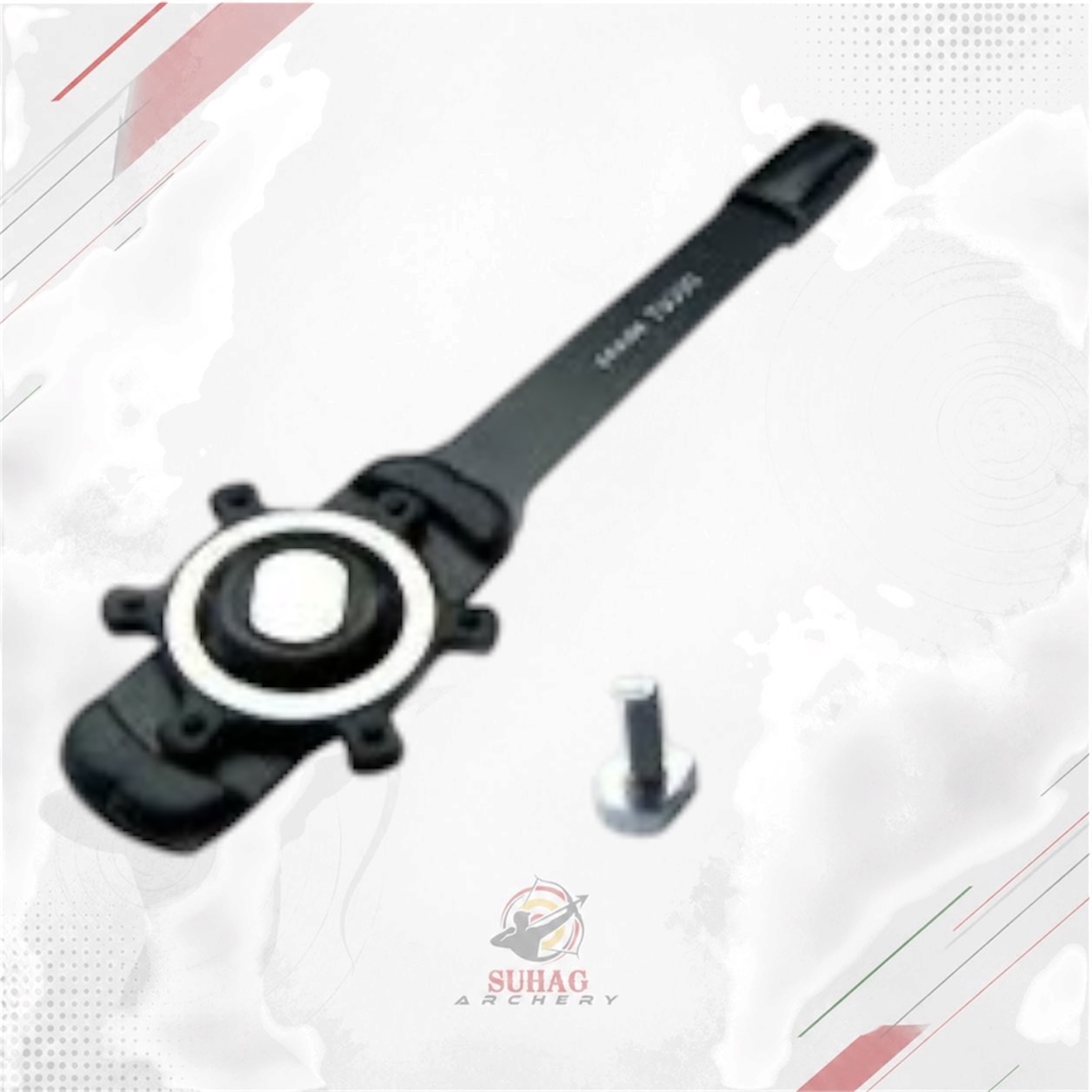
Quick answer: An archery clicker is a small blade on a recurve bow that helps an archer reach a repeatable draw length. When the arrow point passes it, the blade falls and clicks. This sound cues the next part of a controlled shot; it is not a command to jerk or release.
Clickers are most familiar on target recurves, but some other bows have bow-specific draw-length indicators. Here is how the device works, when it can help, and what to check before using one.
Key Takeaways
- A recurve clicker marks a repeatable draw length when the arrow point passes its blade.
- The click is a cue in the shot sequence, not a trigger that requires an instant release.
- Learn basic form first; ask a coach to choose the timing, arrow length, and clicker position.
What is an archery clicker?
Direct answer: A recurve clicker is an adjustable blade positioned to rest on an arrow at the archer’s normal setup. As the archer draws, the arrow point moves past the blade, which drops against the riser and clicks at a chosen draw length.
The device gives the archer an audible and sometimes tactile reference. It can help show whether the draw reached the same point from shot to shot, but it cannot make the anchor, posture, or release consistent by itself. For those fundamentals, see our guide to finding a repeatable archery anchor point.
How does an archery clicker work?
Direct answer: The blade sits across the arrow near its point. During the draw, the point travels backward until it clears the blade; the blade then snaps against the riser and makes a sound. That sound marks a repeatable draw-length reference while the archer remains in control of aiming and release.
Clicker placement is specific to the archer’s draw and arrows. The archer should not change their posture or reach farther just to make the click happen. A coach may check draw length and arrow fit together; our draw-length measurement guide explains why draw length is measured using a consistent form.
Archery GB describes a recurve clicker as a way to check that the bow is drawn to the same place each time, with the arrow placed underneath the device. Its beginner’s guide to archery gives a short overview.
When should a beginner use a clicker?
Direct answer: A clicker is usually introduced after a recurve archer can repeat basic posture, anchor, and draw length. World Archery’s Level 1 coaching manual says a coach may add one once form is sound and draw length is consistent. Beginners should not force their draw to make a clicker activate.
A clicker can help an archer notice changes in draw length, but an inconsistent click may simply reflect changing form or equipment setup. If you are still learning how to stand and aim, focus on those steps first. The recurve archery equipment guide covers the main parts of a target-recurve setup.
Read the relevant section of the World Archery Level 1 Coaches Manual. It describes the clicker as a draw-length check and advises introducing it after a novice has good form and a consistent draw length.
How do you shoot through a clicker?
Direct answer: After a coach sets it, nock an arrow under the blade and follow your normal shot sequence. Reach your usual anchor, keep aiming, and continue smooth expansion until the click. Treat the sound as a timing cue, not a reason to hurry; let down safely if the shot stalls.
- Start with the normal setup. Check that the arrow is correctly nocked and rests under the clicker blade, then use your established stance and grip.
- Draw to your usual anchor. Keep the same head, hand, and shoulder position you practise without the clicker.
- Continue a controlled expansion. Let the arrow point pass the blade through the planned movement. Do not punch, pluck, or suddenly shorten the movement when you hear the click.
- Finish the shot or let down. If you cannot continue with control, lower the bow safely and reset rather than holding, forcing, or releasing under strain.
Depending on the learner, a coach may first ask them to watch the arrow point move past the blade. World Archery’s Level 2 coaching manual describes progressing to use without looking at the point once draw length is consistent.
How is a recurve clicker different from a draw stop?
Direct answer: A recurve clicker and a compound draw stop both help standardize draw length, but they work differently. A clicker senses the arrow passing its blade and makes a sound; a compound stop is part of the cam or cable system. Barebow and traditional archers often use anchor references instead.
| Bow setup | Common draw-length reference | What to remember |
|---|---|---|
| Target recurve with a clicker | Arrow point passing the blade | The device gives a sound cue; the archer still controls the shot. |
| Compound bow | A cam or cable draw stop, often felt as the “wall” | This is a mechanical stop, not a recurve clicker; use the bow maker’s setup instructions. |
| Barebow or traditional bow without a clicker | Anchor, string hand position, and repeatable shooting sequence | Methods and event rules vary, so check the rules for the discipline you shoot. |
World Archery also describes the recurve clicker and compound wall as different draw-check mechanisms in its article about shooting at uphill and downhill angles. These references support repeatability in different ways; one is not a substitute for the other.
Can a clicker be used in traditional or Indian archery?
Direct answer: Some traditional setups use a draw-length indicator, but not every traditional bow is designed for one. Suhag Archery lists a bamboo clicker for an Indian Round bow. Confirm compatibility with the bow and arrow, and check the rules for your club or competition before fitting any device.
Traditional and Indian archery cover different bow designs and local practices. A clicker made for one bow should not be assumed to fit another. For example, Suhag’s bamboo clicker for an Indian Round bow is listed as a draw-length indicator for that specific bow type.
For a modern target recurve, the Decut SOLO recurve clicker is listed with a spring-steel blade and both M4 and 6-32 mounting screws. Check the thread and fit of your own riser before choosing a model; a product listing cannot confirm compatibility with every bow.
What should you check if a clicker feels wrong?
Direct answer: If a clicker activates at the wrong time, check whether your anchor or draw changed, then ask a coach to inspect blade position, arrow length, and riser fit. Do not change your draw or use a shorter arrow to force a click. Stop if the arrow may be too short or unsupported.
- It clicks too early or late: Your draw or anchor may have changed, or the blade may need an adjustment by a coach.
- You cannot reach the click comfortably: Do not pull harder or change posture to force it. Check draw length, arrow fit, clicker placement, and bow weight with an instructor.
- You freeze after the sound: Practise the complete shot sequence with a coach; the click is not a trigger or a demand to rush.
- The arrow is not safely supported: Stop and have an experienced archer inspect the arrow length and bow setup before shooting again.
Never use a clicker to make an arrow that is too short appear suitable. Archery GB warns beginners not to use arrows that are too short because they can come off the rest during the draw.
Archery clicker FAQs
Quick answer: A clicker marks a chosen draw length on some bows, especially target recurves. It can support a consistent shot after an archer has learned the basics, but correct fit and coaching matter. The click is a cue to continue controlled execution, not an automatic release signal.
What does a clicker do in archery?
A recurve clicker marks a repeatable draw length. When the arrow point passes the blade, it makes a sound cue. The archer still controls aiming, expansion, and release.
Do all recurve archers need a clicker?
No. A clicker can help target recurve archers monitor draw length, but it is optional and should be introduced when an archer has a consistent basic shot and a coach can set it correctly.
Should I release as soon as the clicker clicks?
No. The click is a cue that the arrow has reached the set draw length. Continue the planned shot with controlled expansion and release; do not jerk the string just to react to the sound.
Can you use a clicker on a traditional or Indian round bow?
Some setups use a bow-specific clicker, including clickers made for Indian Round bows. Compatibility varies, so check the bow, arrow length, and local rules with a knowledgeable coach before fitting one.
When should a beginner start using a clicker?
A beginner should consider a clicker after learning safe basic form and developing a repeatable draw length and anchor. An archery coach should decide when to add it and set its position.