
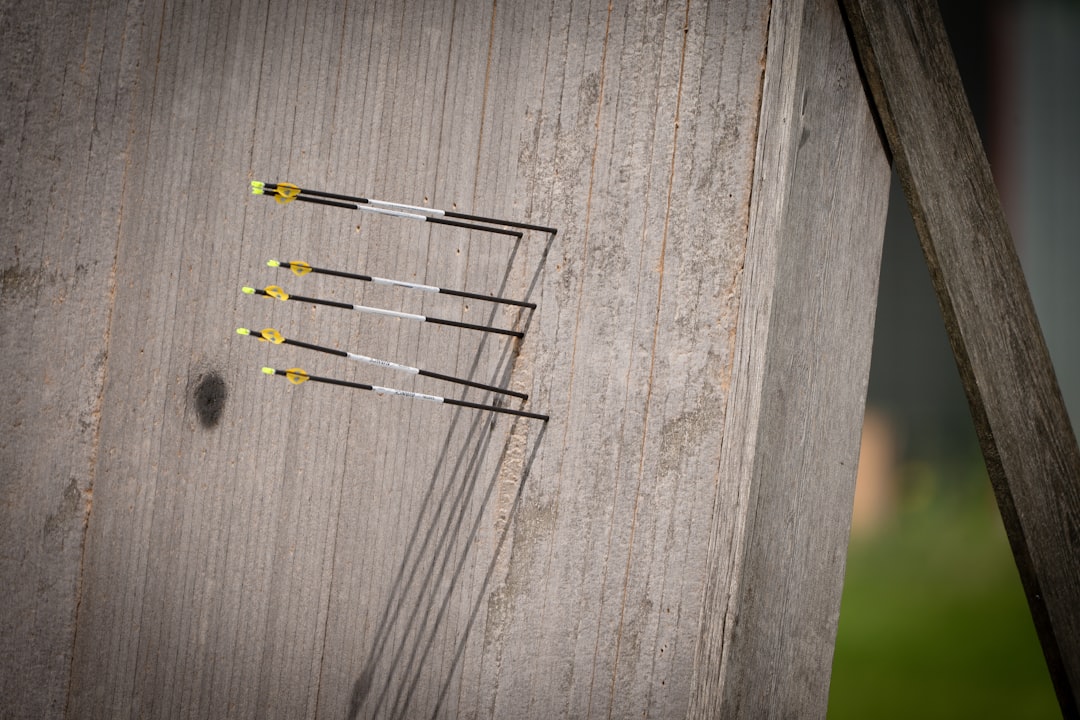
An arrow is fishtailing when its tail appears to wag from side to side after release. Some shaft flex is normal, especially from a finger-released recurve, but persistent or uneven wagging can point to a spine, clearance, setup, or release issue. Check the bow and arrows systematically with a coach.
Key Takeaways
Do not diagnose an arrow from one shot or change several settings at once. First rule out damaged equipment, then check the nock, rest, clearance, and measured arrow match. A coach can observe repeatable groups and adjust one variable at a time.
- Normal shaft flex is part of the shot; visible wobble alone does not identify its cause.
- Fishtailing is side-to-side movement; porpoising is up-and-down movement.
- Stop shooting any cracked or damaged arrow and have the setup inspected.
What does fishtailing look like in archery?
Fishtailing describes side-to-side movement of an arrow’s tail as it flies. A finger-released arrow bends horizontally as it leaves the bow, so some flex is expected; a visible, repeated wag may indicate a poor match, contact, or inconsistent release. Observe multiple safe shots from a consistent distance before drawing conclusions.
Do not confuse the shaft’s normal flex with a stable arrow flying badly. A single shot, camera angle, wind, or inconsistent release can make the tail appear to move. Film only from a safe position approved by the range, never from downrange or beside the arrow’s path.
Why is my arrow fishtailing?
Common causes include an arrow spine that does not suit the bow, an arrow or nock contacting the rest or bow, a loose or poorly fitting nock, bow setup changes, or an inconsistent release. These symptoms overlap, so fishtailing is a clue to inspect the whole system rather than proof of one specific fault.
| Visible movement or clue | What it may indicate | What to check first |
|---|---|---|
| Tail swings side to side | Shaft flex, spine mismatch, clearance, or release inconsistency | Shaft integrity, nock fit, rest contact, and arrow chart match |
| Tail moves up and down | Nocking-point setup, release, or vertical contact issue | Consistent anchor, nocking point, and clearance with a coach |
| One arrow behaves differently | Damaged shaft, loose component, or inconsistent release | Stop and inspect that arrow before the next shot |
A bare-shaft or paper test can help an experienced archer tune a setup, but test results depend on the bow style and a sound baseline. The arrow spine guide explains stiffness, and our draw-length measuring guide covers two inputs used in shaft selection.
How can you troubleshoot fishtailing safely?
Begin with safety and simple checks: inspect each shaft and nock, confirm the bow is assembled correctly, and verify that the arrows match the maker’s chart for actual draw weight and arrow length. Then let a coach watch a small, consistent group and check clearance or tuning, changing one variable at a time.
- Stop shooting any arrow with a crack, split, bend, loose point, or damaged nock. Do not try to straighten a damaged shaft.
- Check that arrows are the same model and length, and that nocks and fletchings are secure.
- Confirm bowstring, rest, and accessories are installed and set as intended; do not adjust a compound bow’s cams or cables yourself.
- Have a coach check the arrow selection chart using measured draw weight, arrow length, and point weight.
- If the equipment passes inspection, ask the coach to observe your release and conduct the appropriate tuning check for your bow. Change one adjustment at a time and record it.
For a starting point, compare your setup with our draw-weight article and recurve equipment guide. Easton’s tuning manual explains that correct shaft selection comes before fine tuning.
Does fishtailing matter with traditional and Indian bows?
Yes. The same basic arrow flex and clearance principles apply, but traditional bows and arrows can use different materials and release styles. Wooden, bamboo, and carbon shafts may require different selection advice. Ask a coach or bowyer familiar with the specific bow to inspect the arrows and evaluate flight.
Do not assume that a modern recurve chart or a tuning adjustment transfers directly to a traditional bow. Match the method to the bow, shaft material, and shooting style, and keep spectators behind the shooting line during any observation.
Frequently Asked Questions
Use these answers as a safe first guide, not as a substitute for checking a bow and shaft in person. A coach can distinguish normal shaft movement from repeatable equipment or form problems.
Is some arrow fishtailing normal?
An arrow shaft flexes as it leaves the bow, and some movement is normal. Persistent or pronounced side-to-side wagging should be checked.
Does fishtailing always mean my arrow spine is wrong?
No. Spine mismatch is one possible cause, but release consistency, nock fit, rest contact, and bow setup can also affect flight.
What is the difference between fishtailing and porpoising?
Fishtailing is side-to-side tail movement. Porpoising is up-and-down movement.
Can I keep shooting an arrow that fishtails?
Stop and inspect it first. Never shoot an arrow with a crack, split, bend, or loose component; ask a coach to check the setup.
Reference: Easton Arrow Tuning and Maintenance Guide.