
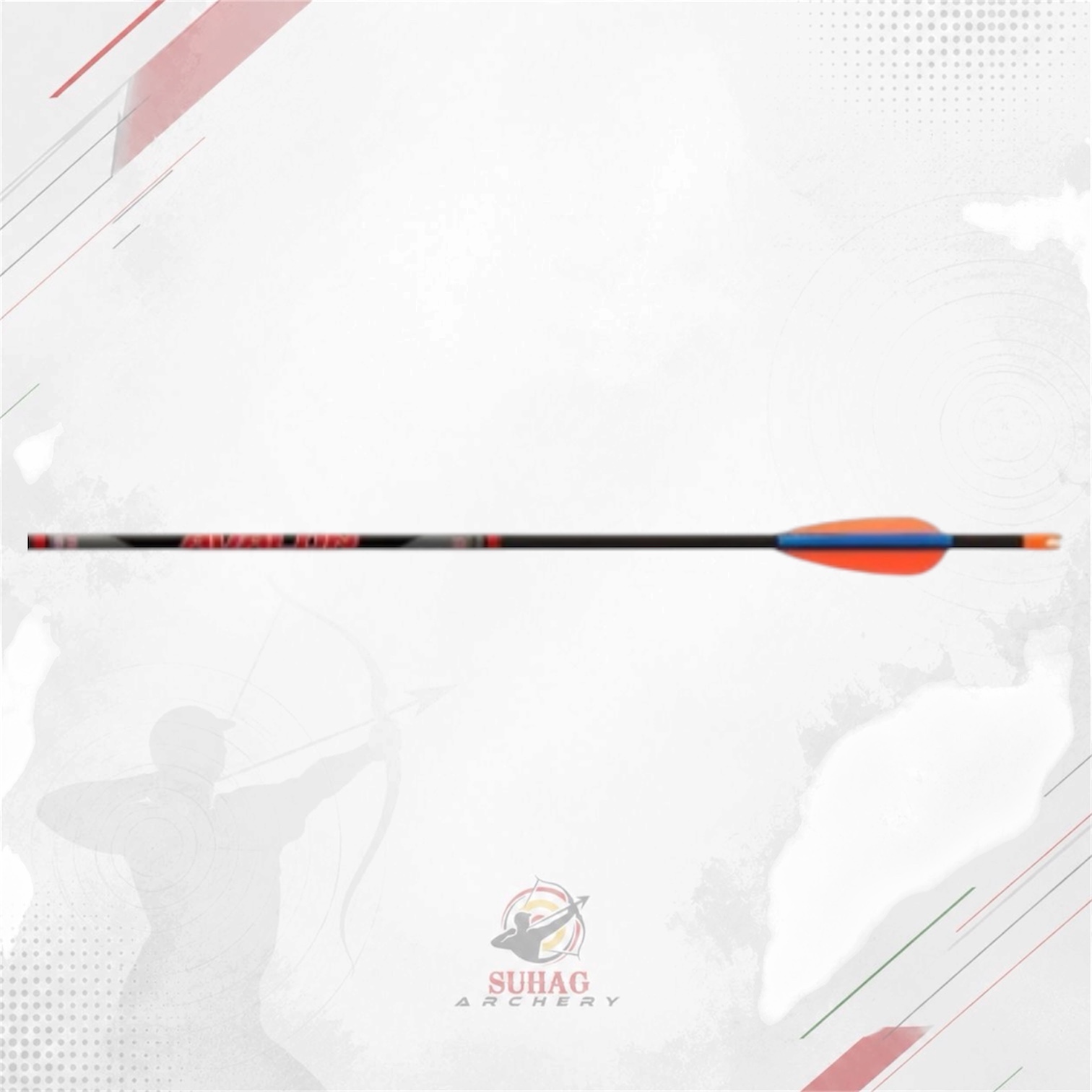
Measure archery arrow length from the bottom inside of the nock groove to the cut end of the shaft; exclude the point and point insert. Safe fit also depends on your draw length, bow/rest geometry, components, and the shaft maker’s chart, so draw length alone cannot set arrow length.
Key Takeaways
- Measure from the bottom inside of the nock groove to the shaft end; exclude the point and point insert.
- Arrow length and draw length are related fitting measurements, but they are not interchangeable.
- For a new setup, have a coach or shop check arrow length and clearance before cutting or shooting.
What does arrow length mean?
Correct arrow length is the shaft-selection measurement from the deepest inside of the nock groove to the end of the shaft. The point is excluded. Because makers may specify how nock or insert components count, use the exact measurement convention printed in that arrow’s selection chart.
For shaft selection, this is not the finished arrow’s tip-to-nock length. Place a ruler along the shaft, start at the deepest inside point where the string sits in the nock, and stop at the shaft’s cut end. Easton defines arrow length this way in its arrow-length FAQ; check your own maker’s guide if components or chart conventions differ.
How do you measure arrow length safely?
To measure a new setup, have a coach or qualified shop use an extra-long measuring arrow at your normal anchor and mark it according to the bow, rest, and shaft-maker’s diagram. Then measure from the bottom inside of its nock groove to the mark; do not draw an unverified short arrow.
- Write down the bow type, your measured draw length, the rest or shelf, point system, and the exact shaft model. The manufacturer’s selection chart may ask for several of these.
- At a range, ask a coach or qualified pro shop to establish a new length with an extra-long measuring arrow. Keep the bow pointed safely downrange and use the normal anchor, not an exaggerated draw.
- Have the coach mark the arrow at the reference shown for that bow and arrow configuration. Easton’s guide uses different diagrams because the mark can depend on the bow window, arrow rest, and components.
- With the arrow undrawn, measure from the bottom inside of the nock groove to the mark. Confirm the result in the current shaft-selection guide before ordering or cutting.
Do not draw or shoot an arrow if it could fall behind the rest, lose support, or be too short for the bow window. The Easton Arrow Tuning and Maintenance Guide explains the measuring references and shaft cut limits.
Arrow length vs. draw length: what is the difference?
Draw length describes the archer’s full-draw distance to a defined reference point on the bow; arrow length measures the shaft from nock groove to shaft end. Draw length helps determine an arrow’s fit, but the two measurements are not interchangeable because bow geometry and clearance also matter.
| Measurement | Reference points | Used for | Not the same as |
|---|---|---|---|
| Arrow length | Bottom inside of nock groove to shaft end | Shaft selection and cut length, using the maker’s convention | Finished point-to-nock length |
| Draw length | Full draw to the bow reference specified by the measurement standard | Bow fit and arrow-selection chart inputs | Arrow shaft length |
For example, an archer may have a measured draw length of 27 inches but need an arrow shaft of a different length. Bow reference points and clearance determine the finished fit. Our guide explains how to measure draw length; World Archery’s Level 1 coaching manual illustrates the full-draw measurement and its bow reference.
How much longer should an arrow be than draw length?
Do not add a universal number to draw length. Safe shaft clearance at full draw depends on the bow window or rest and the arrow components. Easton’s guide uses about 1 inch ahead of the most-forward rest contact for specified target, field, and 3-D setups.
That 1-inch example is not a rule for every recurve, compound, hunting, or traditional setup. Easton’s guide separates configurations and component types; follow the diagram for your exact shaft and bow, and ask a coach if the arrow may sit too close to the rest or bow at full draw.
Does arrow length affect arrow spine?
Yes. All else equal, a longer shaft behaves weaker dynamically and a shorter shaft stiffer, but bow weight, point weight, shaft design, and release also affect arrow flex. Measure length before using the maker’s spine chart; never change shaft length simply to fix tuning without checking the model’s cut limits.
Arrow length is one input to dynamic spine: in Easton’s tuning guidance, shortening a shaft makes it act stiffer, while increasing its length makes it act weaker. Do not cut a shaft to chase a tune without checking its model-specific cut limits. Start with our arrow spine guide and draw-weight guide.
The Avalon Tyro complete carbon arrow is one example of a product listing with multiple shaft-length and spine options. Its menu is not a personal fit recommendation: match the measured bow setup to the current maker’s chart before choosing.
How does this apply to traditional and Indian archery?
Yes, but check the actual bow-and-arrow combination. A traditional bow’s shelf, arrow rest, nock fit, and shaft material can change the safe fit, and carbon-shaft charts may not cover cane or wood. Have a coach or bowyer confirm length and spine for bamboo, cane, or wooden arrows.
Suhag Archery’s bamboo and cane arrows for Indian Round and traditional shooting list lengths from 28 to 32 inches. That is the product’s available range, not a universal fitting rule. A coach or bowyer should confirm the length, nock fit, and shaft suitability for the actual bow.
What arrow-length mistakes should you avoid?
Most errors come from measuring to the point tip instead of the shaft end, treating arrow length as draw length, or borrowing a clearance number from a different bow setup. Cutting before checking the exact shaft’s component instructions can also damage an arrow or leave it too short.
- Starting the ruler at the outside back of the nock or measuring to the point tip.
- Assuming arrow length equals draw length, or copying a clearance number from a different bow or arrow system.
- Cutting before checking component instructions and the model’s maximum cut amount. Easton warns that unsuitable tools can damage carbon shafts; beginners should have a qualified shop do the cutting.
An arrow-length measurement is only one part of a safe setup. Use the manufacturer’s chart for the exact shaft, bow weight, point, and release style; then have an experienced archer verify the arrow before shooting.
Primary references: Easton arrow-length FAQ; Easton Arrow Tuning and Maintenance Guide; World Archery Level 1 Coaching Manual.
Arrow length FAQs
Arrow length helps select a shaft, but it is not the same as draw length and cannot be set from one generic rule. These answers cover the measurement endpoints, safe clearance, cutting, and special considerations for traditional arrows before shooting a new setup.
What is the correct way to measure arrow length?
Measure from the deepest inside point of the nock groove to the cut end of the shaft. Do not include the point or point insert. That is the common shaft-selection definition; follow the maker’s chart if its component system defines a cut line differently.
Is arrow length the same as draw length?
No. Draw length is a full-draw distance measured to a bow reference; arrow length runs along the shaft from the nock groove to the shaft end. They guide different parts of bow and arrow selection, and are not interchangeable.
How much longer should an arrow be than draw length?
There is no universal allowance. Easton’s guide uses about 1 inch beyond the most-forward rest contact for specified target, field, and 3-D setups; other bow, rest, and component configurations follow different diagrams. Verify your exact setup with a coach or maker chart.
Is it safe for a beginner to cut carbon arrows at home?
Beginners should have a qualified coach or shop confirm and cut arrow length. Easton warns unsuitable cutting tools can damage carbon shafts and recommends protective equipment; follow the shaft maker’s method rather than improvising or cutting a shaft too short.
Do traditional or Indian arrows use the same length measurement?
The nock-to-shaft-end measure is useful, but traditional bow clearance and shaft materials vary. Bamboo, cane, and wooden arrows should be fitted to the actual bow by a coach or bowyer, not selected from a carbon-shaft chart by default.