
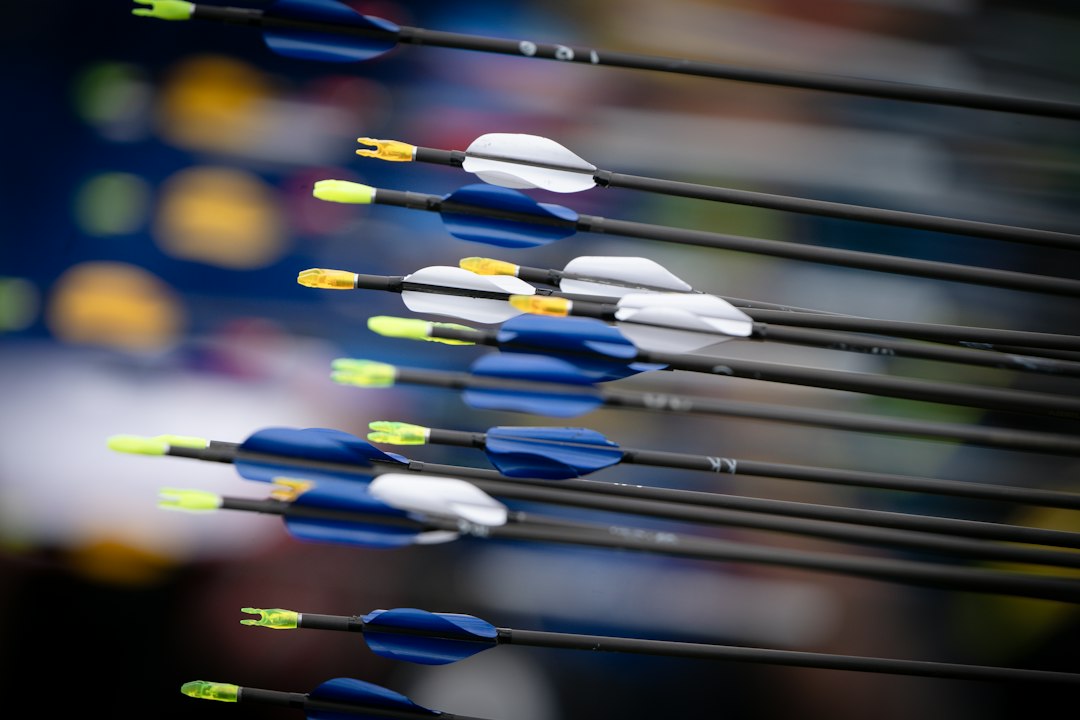
Four-millimetre micro-diameter arrows can reduce the shaft’s exposed profile compared with larger-diameter arrows, which may help limit wind deflection when other setup factors are similar. They also need correctly matched spine and 4 mm components, may cost more as a complete system, and are not automatically the best choice for every target or archer.
One important detail: “4 mm” usually describes a shaft’s inside-diameter system, not its outside diameter. The actual outside diameter varies by model and spine. Choose arrows for the bow, draw length, point weight, and discipline rather than the diameter label alone.
Key Takeaways
A 4 mm arrow is a shaft-and-component system, not just a skinny tube. Compare its outside diameter, mass, spine options, compatible points and nocks, and the targets you shoot before deciding whether a micro-diameter shaft suits your setup.
- Smaller outside diameter can reduce wind drag, but it cannot guarantee tighter groups or replace good form.
- Confirm spine and arrow length using the manufacturer’s current chart and your real bow setup.
- Check component availability and target compatibility before switching to a 4 mm system.
What is a 4 mm micro-diameter arrow?
A 4 mm micro-diameter arrow generally uses a shaft with an internal diameter near four millimetres; its outside diameter is larger and depends on the shaft’s wall thickness and spine. The term describes a component system, so check the model’s technical chart rather than assuming every shaft measures exactly 4 mm across.
For example, Easton’s X10 4MM Parallel Pro lists 4 mm fitment and outside diameters that vary by spine, from roughly 0.204 to 0.245 inches in its current chart. That is why the “4 mm” label should not be read as the arrow’s measured external width. Other brands may use different names and component standards.
Manufacturers may offer an arrow as a bare shaft, a shaft with points, or a finished arrow with nock and vanes installed. Confirm what the listing includes. A shaft may need a specific point, pin, pin nock, collar, or half-out. Parts that look similar can have different diameters or fitments.
Suhag Archery lists the Easton X10 4MM Parallel Pro with multiple spine options and shaft-only or shaft-with-point configurations. Easton’s page states that components are sold separately for the bare shaft. Check the current listing and manufacturer chart for the exact items included in the option you select.
How do 4 mm arrows compare with 5 mm and 6 mm shafts?
Smaller-diameter arrows present less cross-sectional area to side wind when compared under similar conditions, but real performance also depends on arrow mass, speed, fletching, point weight, shaft length, and the archer. Larger shafts may offer different durability, component, target, or line-cutting trade-offs.
| Consideration | 4 mm micro system | 5 mm or 6 mm system |
|---|---|---|
| Outside diameter | Usually a narrower profile; verify the model’s outside diameter by spine. | Typically wider, though actual size varies among models and manufacturers. |
| Wind response | Can reduce exposed shaft area and may reduce wind deflection when other factors are comparable. | More exposed area can increase drag; actual group difference depends on the full arrow and conditions. |
| Mass and speed | Depends on material, wall thickness, spine, components, and length; not determined by diameter alone. | Also varies by shaft and components; diameter alone does not tell you speed or trajectory. |
| Components | Needs dedicated compatible points, nocks, pins, collars, or half-outs. | Uses a different component standard; availability may be broader or simply different. |
| Targets and scoring | Can penetrate farther into some targets; narrow shafts may have different line-cutter outcomes in some formats. | May be easier to remove from some targets and may offer a wider shaft for line contact, subject to rules. |
| Best fit | Useful when the archer has a clear reason to prioritize a narrow shaft and can tune it. | Often practical for general practice or where familiar shafts and components are readily available. |
This is a broad comparison, not a ranking. Do not assume that a 4 mm arrow is always faster, more accurate, or stronger. Two arrows with different mass, stiffness, vanes, or points are not an apples-to-apples test. If you change diameter, tune the new arrow system rather than carrying the old sight marks and assumptions over.
What are the benefits and trade-offs of micro-diameter arrows?
The main reason archers consider a micro-diameter arrow is its narrow profile, which can reduce aerodynamic drag from crosswind compared with a wider shaft when other variables are similar. The trade-offs include component fit, arrow selection, target removal, cost, and the need to tune the complete arrow.
Potential advantages
- Reduced exposed shaft area: A narrower outside diameter can present less side area to wind. The benefit is most relevant when wind, distance, arrow speed, and skill make it measurable.
- Specialized component choices: Some systems offer pins, collars, or point options that can suit a particular target or field setup.
- Long-range tuning option: Experienced archers may test micro shafts as part of optimizing a known bow-and-arrow combination.
Trade-offs to check
- Component compatibility: Points, inserts, pins, nocks, and collars must match the exact shaft model and spine.
- Arrow mass: A smaller diameter does not mean a lighter arrow. Compare grains per inch and component weights in the technical chart.
- Target removal: A small shaft can enter deeply into a dense or worn target. Use a suitable target and arrow puller if needed.
- Replacement availability: Confirm that the exact shaft spine and components are available before buying a dozen.
- Learning curve: New arrows need their own spine, length, point, clearance, and sight checks.
Manufacturers often discuss wind and penetration benefits for specific micro-diameter hunting shafts. Treat those claims as specific to the model and test conditions, not a guarantee for every target arrow. For target shooting, compare matched arrow groups at the distances and wind conditions you actually shoot.
Are 4 mm arrows better for target, field, or 3D archery?
Four-millimetre arrows can be useful in outdoor target or field conditions where wind and distance matter, but the best arrow depends on the rules, target, bow, and archer. Indoor target and 3D choices may prioritize line contact, durability, component fit, or availability instead.
| Use case | When 4 mm may make sense | What to check first |
|---|---|---|
| Outdoor target | When you have a stable form and want to compare a narrow shaft in wind or at longer distances. | Spine, mass, vane clearance, point fit, target rules, and sight marks. |
| Field archery | When the course and conditions reward a tuned arrow that behaves predictably across distances. | Arrow protection, component security, local rules, and target extraction. |
| Indoor target | When the shaft fits the discipline and you have a clear performance reason. | Scoring rules and whether a larger shaft’s line contact is advantageous in that event. |
| 3D archery | For a tuned setup where the archer values the narrow profile or a particular component system. | Target material, arrow removal, competition rules, and replacement part supply. |
| Beginner practice | Usually only if a coach selects the shaft and it is practical to replace. | Correct spine, safe target, matching arrows, and total component cost. |
World Archery recognizes different disciplines and equipment categories, and event rules can specify allowable arrows or scoring conditions. Check the rules of your actual event. Do not select a shaft for a perceived scoring advantage before checking current competition regulations.
How do you choose the correct 4 mm arrow spine?
Use the shaft maker’s current selection chart with the bow’s actual draw length, measured draw weight, arrow length, and point weight. “4 mm” does not identify stiffness, and copying another archer’s spine can create a poor or unsafe match.
- Measure draw length correctly. Use the maker’s method and have a coach confirm where the arrow sits at full draw.
- Measure bow weight at your draw length. Limb label weight is not always the weight you draw in practice.
- Choose a safe arrow length. The shaft must remain safely on the rest at full draw. Do not trim carbon arrows without understanding the resulting spine and component fit.
- Use the chart for the exact model. Charts differ across brands, materials, and shaft series.
- Include point and component mass. A heavier point or insert changes the dynamic behavior of the shaft.
- Have the setup checked. Confirm nock fit, rest clearance, and tuning before shooting at full distance.
Suhag Archery’s arrow spine guide explains static spine and why arrow length and bow setup matter. Its guide to measuring draw length is a useful companion, but the manufacturer’s model-specific chart should be the final selection reference.
What components does a 4 mm arrow need?
A complete 4 mm arrow may use a shaft, matched point or half-out, pin or nock collar, compatible nock, and fletching. The exact combination depends on the shaft model and the bow; component standards are not universal across all manufacturers that use a “4 mm” label.
Before ordering, make a component checklist from the manufacturer’s chart:
- shaft model, spine, and cut length;
- point or insert type and weight;
- pin, collar, or half-out part number;
- nock model and throat size for the serving;
- fletching profile and orientation;
- finished arrow mass and any event-specific requirements.
Do not force a nock or point that seems close to the right size. A wrong fit can damage the shaft or change how the arrow sits on the string and rest. If the shaft is sold as bare, verify whether components are included before comparing it with a finished-arrow listing.
For the Easton system on Suhag Archery, the Easton 4MM Pins are described as replacement pin inserts compatible with Easton 4MM target shafts and specified nocks. Check the shaft’s chart and product configuration before adding them to an order; a pin is only one component, not a complete arrow.
Are 4 mm arrows a good choice for beginners?
They can be, if a coach or qualified shop selects the correct shaft and compatible parts, but a beginner rarely needs a micro-diameter arrow simply to learn. Start with safe, matched arrows that are easy to replace and appropriate for the target and bow.
Early practice is more useful when equipment is consistent and the archer can focus on stance, draw, anchor, and release. Premium tolerances or a narrow shaft cannot compensate for a bow that is too heavy, a poor spine match, damaged fletching, or a target that does not stop the arrow safely.
If a coach recommends a 4 mm arrow, ask why that model suits your draw length, bow weight, and discipline. Ask whether the exact spine and replacement components will be available locally. A consistent set of six or twelve correctly selected arrows is more useful than a fashionable shaft whose parts cannot be replaced.
Beginners can learn how arrow behavior relates to form through Suhag Archery’s article on why an arrow fishtails. Any persistent abnormal flight should prompt a safe equipment check, not a blind change in arrow diameter.
What should you compare before changing from larger arrows?
Compare complete, tuned setups rather than shaft diameter alone. Record the current arrow’s length, spine, total mass, point, nock, fletching, group size, sight marks, and conditions; then select and tune the new shaft before judging whether the change helped.
A practical comparison should keep the bow, archer, distance, target, and weather as similar as possible. Shoot multiple groups rather than one good end. If the new arrow is lighter, heavier, stiffer, or has different fletching, those changes can explain performance independently of diameter.
Check target pull before shooting a full session. A narrow shaft can be difficult to remove from a dense target, and an arrow puller may be useful. Inspect the target for enough depth and stopping material. Never shoot a target that allows arrows to pass through or exposes people or property behind it.
Finally, confirm price and replacement supply without treating cost as a performance measure. Match the total system cost—including components and spares—to your intended use. If your current arrows group well and meet the event rules, there is no requirement to switch.
Sources and further reading
Arrow diameter, outside dimensions, components, and performance claims vary by product. Use a manufacturer’s current specification and shaft chart for selection; the links below are product or federation references rather than a guarantee of results for every bow and archer.
- Easton: X10 4MM Parallel Pro specifications and component fitment
- Easton: arrow FAQs and small-diameter discussion
- World Archery: arrow and equipment overview
Frequently Asked Questions
What does 4 mm mean on an arrow?
It usually refers to the shaft’s internal-diameter component system, not its outside diameter. Check the specific model’s chart because outside diameter varies by spine and wall thickness.
Are 4 mm arrows better in wind?
A narrower outside profile can reduce wind drag when other factors are similar, but actual results depend on arrow mass, speed, fletching, distance, and conditions. It does not guarantee tighter groups.
Are 4 mm arrows suitable for beginners?
They can be if correctly matched, but beginners do not need a micro-diameter shaft just to learn. Choose safe arrows with the right spine and readily available compatible parts.
Do 4 mm arrows use special points and nocks?
Usually yes. Points, pins, collars, half-outs, and nocks must match the specific shaft model. Do not assume all products labeled 4 mm share the same fitment.
Should I switch from 5 mm or 6 mm arrows to 4 mm?
Switch only for a clear reason and after comparing complete, tuned setups. Confirm spine, component availability, target removal, competition rules, and grouping with the new arrows before deciding.