
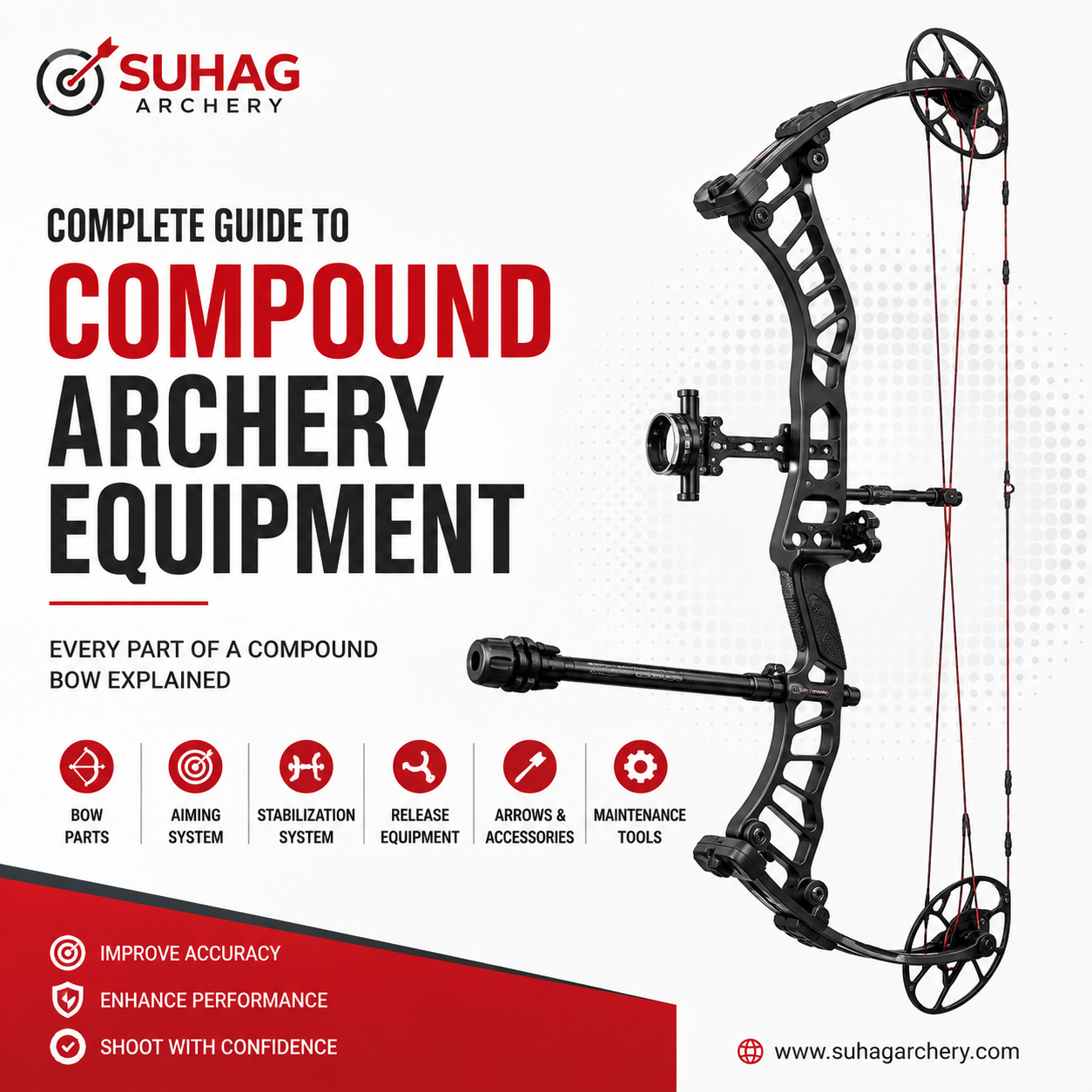
Compound archery is one of the most advanced forms of archery, known for its precision, speed, and power. Unlike traditional bows, a compound bow uses a system of cams and cables to reduce the holding weight at full draw, allowing archers to aim more steadily. Compound bows are widely used for target competitions, field archery, hunting (where permitted), and recreational shooting. This guide explains every major part of a compound bow and the accessories commonly used with it.
What is a Compound Bow?
A compound bow is a modern bow that uses cams, cables, and pulleys to maximize efficiency. As the bow is drawn, the cam system reduces the amount of weight the archer must hold, making it easier to maintain accuracy during aiming. Compound bows are popular among beginners and professional archers due to their high performance and adjustability.
Main Parts of a Compound Bow
Riser
The riser is the central frame of the compound bow. It holds all major components, including the limbs, cams, sight, rest, and stabilizers. Modern risers are commonly made from aluminium or carbon fiber.
Limbs
Compound bow limbs store energy when the bow is drawn. They are shorter and stiffer than recurve limbs and work together with the cam system to generate speed and power.
Cams
Cams are the heart of a compound bow. They control the draw cycle, create let-off, and determine the bow’s performance. Different cam designs provide varying levels of speed, smoothness, and forgiveness.
Axles
Axles hold the cams in position and allow them to rotate smoothly during the draw and release cycle.
Bow String
The bow string transfers stored energy from the limbs to the arrow. Regular inspection and waxing help maintain consistent performance.
Control Cables
Compound bows use control cables along with the string to synchronize the cams and maintain proper timing.
Cable Slide or Roller Guard
The cable guard keeps the cables away from the arrow path, ensuring proper arrow clearance during the shot.
Arrow Support and Release
Arrow Rest
The arrow rest supports the arrow before release. Popular options include launcher rests, drop-away rests, and containment rests.
D-Loop
The D-loop is attached to the bow string and provides the connection point for the release aid.
Peep Sight
The peep sight is installed in the bow string and helps align the eye with the front sight for consistent aiming.
Kisser Button
A kisser button provides an additional anchor point by touching the corner of the mouth during full draw.
Aiming Accessories
Compound Sight
A compound sight provides multiple aiming pins or a scope for accurate shooting at different distances.
Scope
Many target compound bows use a magnified scope to improve aiming precision.
Scope Lens
Different magnification lenses allow archers to choose the level of target detail they prefer.
Sight Light
Some competition sights support optional sight lights for improved visibility in low-light conditions where competition rules allow.
Stabilization System
Front Stabilizer
The front stabilizer improves balance and reduces bow movement during aiming.
Side Stabilizer
Side stabilizers help reduce torque and improve overall bow balance.
Quick Disconnect
A quick disconnect allows stabilizers to be easily removed for transportation.
Dampers
Dampers reduce vibration and noise after the shot.
Release Equipment
Release Aid
Most compound archers use a mechanical release aid instead of fingers. Common types include wrist strap releases, thumb releases, hinge releases, and resistance releases.
Release Wrist Strap
Many release aids include an adjustable wrist strap for comfort and consistency.
Arrows and Components
Arrow Shaft
Compound arrows are generally carbon or aluminium-carbon and are selected based on spine, length, and draw weight.
Arrow Points
Arrow points determine front weight and influence arrow balance.
Nocks
Nocks securely connect the arrow to the string.
Fletchings
Vanes stabilize the arrow during flight and improve accuracy.
Arrow Inserts
Inserts are installed inside the front of the arrow shaft to hold the point securely.
Accessories Used by the Archer
- Arm Guard
- Bow Sling
- Quiver
- Bow Stand
- Chest Guard (optional)
- Finger Sling (optional)
- Rangefinder (where permitted)
Bow Maintenance Tools
- Bow Press
- Allen Key Set
- String Wax
- Serving Thread
- D-Loop Material
- Nocking Pliers
- Bow Square
- Replacement Peep Tubing (if required)
Bow Storage
Compound Bow Case
A quality bow case protects the bow, arrows, release aid, stabilizers, and accessories during travel.
Arrow Tube
An arrow tube protects arrows from bending or damage during transport.
Choosing the Right Compound Equipment
When selecting a compound bow, consider your draw length, draw weight, axle-to-axle length, brace height, and intended use. Choosing the correct arrows, release aid, sight, and stabilizers will help improve consistency and overall performance.
Conclusion
Every component of a compound bow plays an important role in producing accurate and consistent shots. From the riser, limbs, cams, and cables to release aids, sights, stabilizers, and arrows, each part contributes to overall performance. Whether you are a beginner or an experienced archer, investing in quality equipment and maintaining it properly will help you shoot with confidence. Explore a complete range of genuine compound bows, arrows, accessories, and maintenance tools at Suhag Archery.